
Plastic Pollution Solutions: A Practical Roadmap for a Cleaner India
India has a plastic problem that is no longer possible to ignore. In September 2024, a University of Leeds study published in the journal Nature named India the world’s largest plastic polluter — responsible for roughly one-fifth of global plastic emissions. It is a sobering headline. But here is the more important truth: plastic pollution is one of the most solvable environmental crises we face. The plastic is visible, the sources are known, and the fixes are practical.
At Operation SHUDDHI®, we believe the question is no longer “how bad is it?” but “what works?” This article lays out the real, proven solutions — and exactly where individuals, communities, and businesses fit in.
The Scale of the Problem — By the Numbers
The data from official and global sources makes the urgency clear:
- India is the world’s largest contributor to plastic pollution, emitting about 9.3 million tonnes of plastic pollution every year — nearly one-fifth of the global total (University of Leeds study, Nature, 2024, Down To Earth).
- India generates around 3.9 million tonnes of plastic waste a year — roughly 10,689 tonnes every day (Central Pollution Control Board, Annual Report 2022-23, CPCB via PIB).
- Globally, only 9% of all plastic waste is actually recycled; the rest is landfilled, burned, or leaked into nature (OECD Global Plastics Outlook, 2022).
- An estimated 11 million tonnes of plastic enter the world’s oceans every year — the equivalent of around 2,000 garbage trucks dumped into our waters daily (UNEP).
The Leeds study points to the real culprit: not just how much plastic we use, but how much goes uncollected and is then openly burned or dumped. That single insight tells us where the solutions must focus.
Why India Struggles — and Why That’s Actually Good News
India’s plastic crisis is less about a lack of recycling technology and more about a collection gap. Plastic that is never collected can never be recycled. When waste isn’t picked up, it gets burned in the open or washed into drains and rivers.
This is good news, because a collection gap is fixable with infrastructure and participation — not decades of research. Fix collection at the source, and a huge share of the problem disappears.
The Solutions That Actually Work
Real progress comes from a chain of simple, repeatable actions. Here is the roadmap:
- Refuse and reduce single-use plastic. Since 1 July 2022, India has banned 19 identified single-use plastic items with low utility and high littering potential (MoEFCC via PIB). Carrying a cloth bag, a steel bottle, and refusing throwaway cutlery removes plastic before it is ever created.
- Segregate at source. Clean, separated plastic is far more recyclable and valuable than mixed waste. Start with our guide to waste segregation at source.
- Capture it with collection points. A dedicated plastic dustbin turns any home, office, school, or society into a permanent recovery point — directly closing the collection gap.
- Recycle responsibly. Collected plastic should go to verified recyclers using modern recycling technologies, not informal open burning.
- Close the loop. Recycled material re-enters the economy as recycled content like rPET, cutting the demand for new plastic.
- Reward the impact. Diverting and recycling plastic avoids emissions that can be measured and even monetised through carbon credits, and producers meet their Extended Producer Responsibility obligations.
What You Can Do — Whoever You Are
- Individuals & families: Refuse single-use plastic, segregate at home, and drop clean plastic at a collection point.
- RWAs, societies & schools: Host a plastic collection dustbin and turn your community into a recovery hub. High-footfall places make the biggest difference.
- Businesses & institutions: Set up collection on your premises, route plastic to responsible recyclers, and strengthen your sustainability and ESG performance in the process.
How Operation SHUDDHI Turns Solutions into Action
Operation SHUDDHI is a nationwide plastic recovery and circular-economy mission built to close India’s collection gap — “From Waste to Wealth.” We make the roadmap above easy to act on:
- Free plastic collection for Delhi NCR residents and organisations.
- Plastic collection dustbins placed where people gather — offices, hospitals, schools, societies, and markets. Every active point is on our live dustbin locator.
- Collection Centre Partnerships for entrepreneurs and organisations who want to build local recovery infrastructure across India.
- Recycled granules for manufacturers ready to close the loop.
In a single day, our team installed 126 plastic collection bins across Delhi NCR — living proof that the collection gap can be closed fast when intent meets execution.
Frequently Asked Questions
1. Is India really the world’s largest plastic polluter? Yes. A University of Leeds study published in Nature in 2024 found India emits about 9.3 million tonnes of plastic pollution a year — roughly one-fifth of the global total — largely because so much waste goes uncollected and is then openly burned or dumped.
2. What is the single biggest solution to plastic pollution in India? Closing the collection gap. Plastic that is never collected can never be recycled, so source-level collection through segregation and dedicated dustbins addresses the largest part of the problem.
3. Which single-use plastics are banned in India? From 1 July 2022, India banned 19 identified single-use plastic items with low utility and high littering potential, including items like plastic cutlery, straws, ear buds with plastic sticks, and thin plastic carry bags and banners.
4. Can recycling really make a difference if only 9% of plastic is recycled globally? Yes — that low rate is exactly the opportunity. Every tonne collected and recycled instead of burned or dumped reduces pollution and emissions, and improving collection is the fastest way to raise that recycling rate.
5. How can my home, society, or business start contributing? Refuse single-use plastic, segregate your waste, and host or use a plastic collection dustbin that routes plastic to responsible recyclers. Operation SHUDDHI can help you set this up.
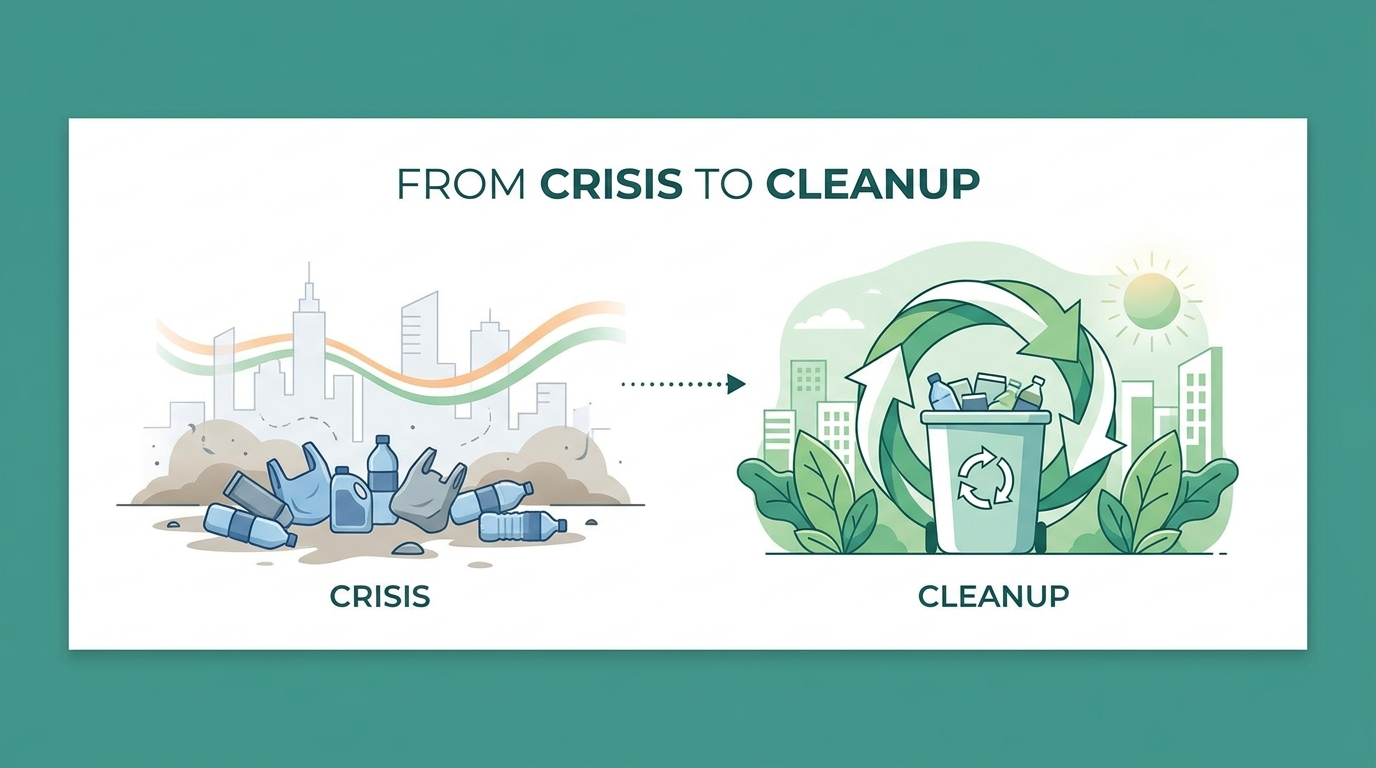
From Crisis to Cleanup
Being the world’s largest plastic polluter is not a verdict — it is a starting point. The solutions are not exotic; they are collection, segregation, recycling, and participation, repeated at scale. Every bin installed, every kilo segregated, and every person who refuses single-use plastic moves the number in the right direction.
Be part of the solution. Request a plastic dustbin for your area, become a Collection Centre Partner, or join the Operation SHUDDHI mission today. Together, we can turn India’s plastic crisis into a cleanup story — from waste to wealth, for a cleaner, circular India.