Plastic Recycling Technologies: India’s Waste-to-Value Shift
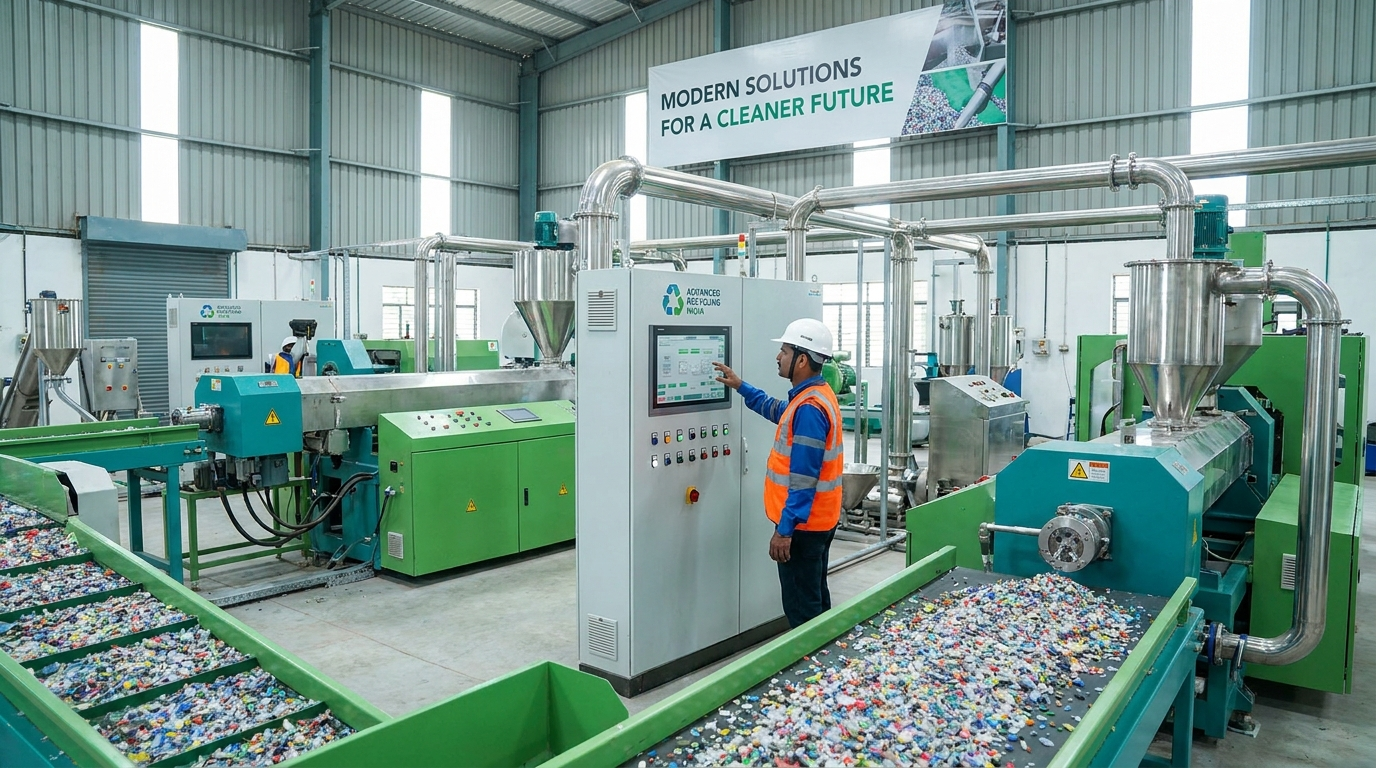
For decades, “recycling” in India meant a fragmented chain of waste pickers, aggregators, and small reprocessors producing low-grade plastic that could only be downcycled into the cheapest possible products. That picture is changing fast. A new generation of plastic recycling technologies is transforming discarded packaging into raw material that can re-enter premium supply chains — food-grade bottles, automotive components, and durable consumer goods.
For plastic recyclers, waste management companies, and manufacturers, understanding these technologies is no longer optional. The businesses that invest in the right recycling processes will define India’s circular economy over the next decade. This guide breaks down the core technologies, where each one fits, and how they connect to a larger mission of turning plastic waste into genuine value.
Why Recycling Technology Matters More Than Ever
India generates more than 3.5 million tonnes of plastic waste annually, and the pressure to recover it is intensifying from every direction — tightening Extended Producer Responsibility (EPR) rules, brand commitments to recycled content, and consumer demand for sustainability. But not all recycling is equal. The value a recycler can extract depends almost entirely on the technology they deploy and the quality of feedstock they process.
The goal of modern recycling is to move away from downcycling — turning bottles into low-grade fibre or filler that eventually becomes waste again — toward closed-loop recycling, where a PET bottle becomes another PET bottle, indefinitely. Achieving that requires both better collection and segregation upstream, and more advanced processing technology downstream.
The Core Plastic Recycling Technologies
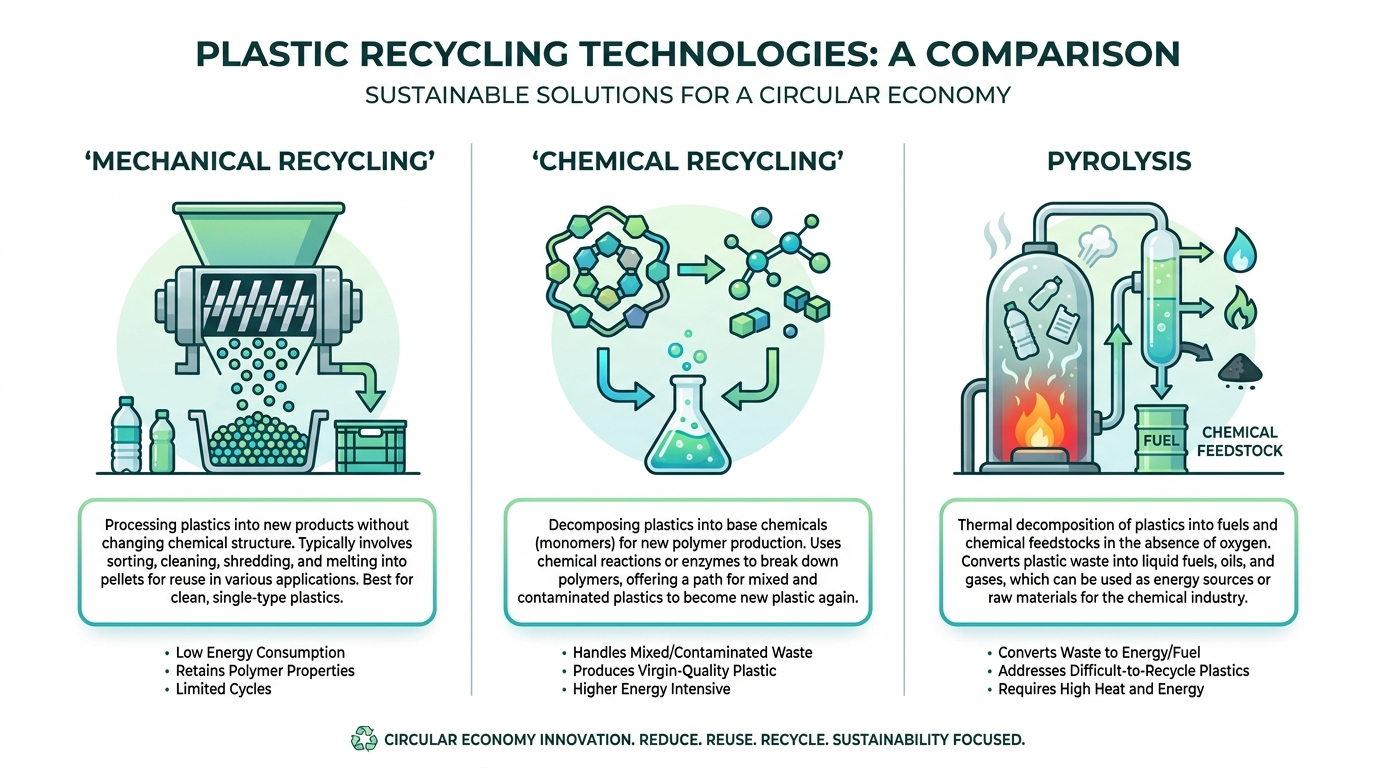
Plastic recycling today falls into three broad technology families, each suited to different materials, volumes, and end markets.
Mechanical Recycling
Mechanical recycling is the workhorse of the industry and accounts for the vast majority of plastic recovered in India. The process is physical, not chemical: collected plastic is sorted by polymer type and colour, washed to remove contaminants, shredded into flakes, and then melted and extruded into pellets that manufacturers can buy as a substitute for virgin resin.
Its strengths are cost-efficiency, lower energy consumption, and a mature supply chain. It works exceptionally well for clean, single-polymer streams such as PET bottles and HDPE containers. The leading edge of mechanical recycling — often called bottle-to-bottle or food-grade rPET recycling — uses advanced decontamination and super-cleaning steps to produce recycled PET pure enough for direct food contact.
The limitation is quality degradation. Each melt cycle slightly shortens polymer chains, so mechanically recycled plastic can only be reprocessed a finite number of times before its properties decline. It also struggles with mixed, contaminated, or multilayered plastics.
Chemical Recycling
Chemical recycling — sometimes called advanced or molecular recycling — addresses exactly the waste streams mechanical recycling cannot handle. Instead of melting the plastic, it breaks polymers back down into their fundamental chemical building blocks (monomers) or other useful feedstocks.
Processes such as depolymerisation and glycolysis can take coloured, mixed, or degraded PET and reduce it to virgin-equivalent monomers, which are then re-polymerised into plastic indistinguishable from new. Because the output is chemically identical to virgin material, chemical recycling enables true infinite recyclability without quality loss.
The trade-offs are higher capital costs, greater energy intensity, and the need for scale to be economically viable. For India’s recycling industry, chemical recycling represents the frontier — the technology that will unlock the roughly 40% of plastic waste that is currently considered too low-quality to recycle profitably.
Pyrolysis and Feedstock Recovery
The third family targets the hardest-to-recycle plastics: heavily mixed, multilayered, and contaminated material that neither mechanical nor conventional chemical recycling can economically process. Pyrolysis uses heat in an oxygen-free environment to break these plastics down into pyrolysis oil, which can be refined into fuels or used as feedstock for new plastics and chemicals.
Pyrolysis is particularly relevant for the flexible and multilayered packaging that floods Indian waste streams and would otherwise end up in landfills or incinerators. While debate continues about its energy balance and emissions, when applied to genuinely non-recyclable plastics it offers a recovery pathway where the only alternative is disposal.
Beyond the Machine: Why Feedstock Quality Decides Everything
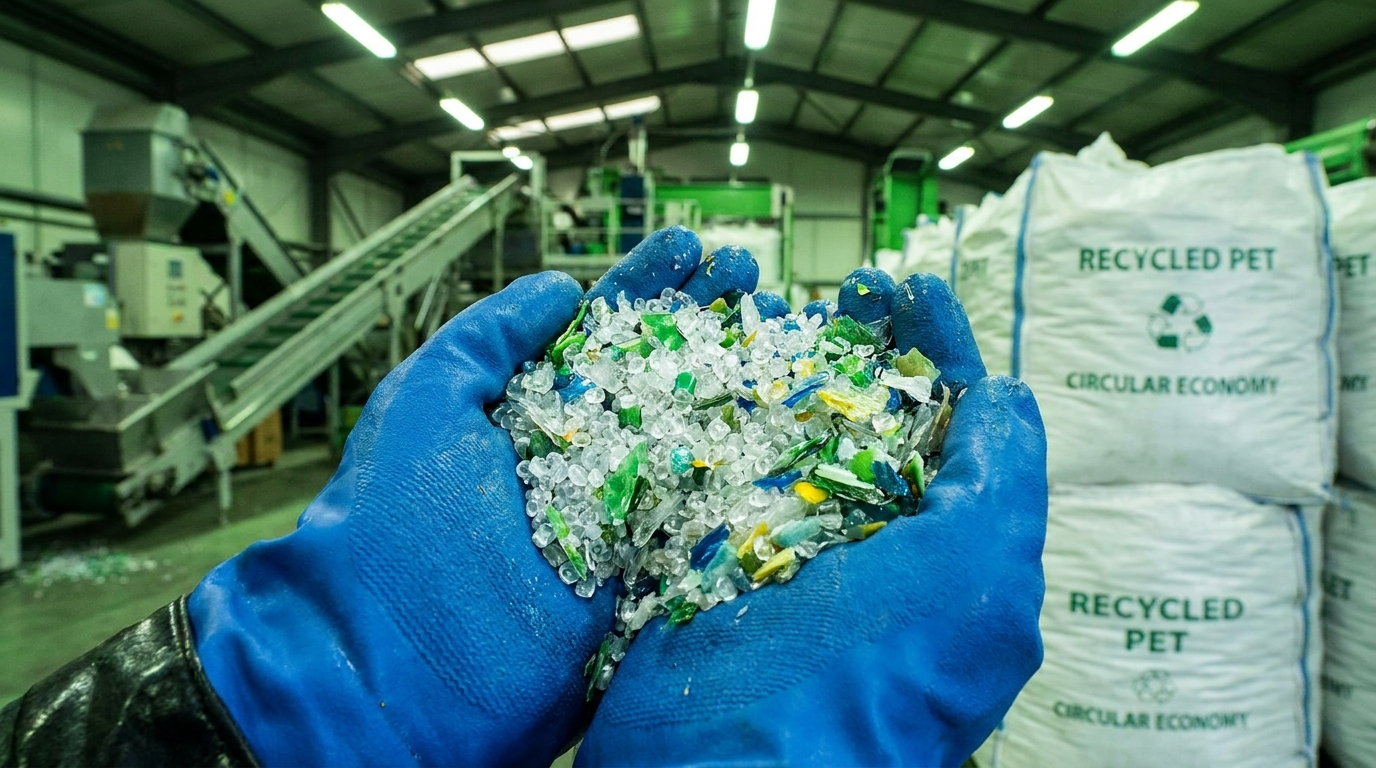
Here is the insight that separates struggling recyclers from successful ones: the most advanced recycling technology in the world cannot compensate for poor feedstock. Every recycling process performs better with clean, well-segregated input. A bale of mixed, food-contaminated plastic will produce low-value output no matter how sophisticated the downstream machinery.
This is why the recycling value chain has to be understood as a whole, not just a question of which machine to buy. Three upstream factors determine the economics:
- Source segregation — separating plastics at the point of generation dramatically increases recovery value and reduces processing cost.
- Polymer identification — modern facilities use near-infrared (NIR) optical sorting and AI-driven systems to separate polymer types at high speed and accuracy.
- Traceability — documented, contamination-controlled collection allows recyclers to command premium prices, especially for food-grade and EPR-certified material.
A recycler that secures a clean, traceable feedstock supply can run a far more profitable operation than one with superior machinery but inconsistent input. Technology and supply chain are two halves of the same equation.
Connecting Technology to Mission: The Operation SHUDDHI Approach
This is precisely where Operation SHUDDHI® plays a defining role. As India’s Plastic Waste Recovery and Circular Economy Mission, Operation SHUDDHI focuses on transforming plastic waste into wealth, livelihoods, and environmental value through collection, recycling, awareness, and circular-economy initiatives.
The mission’s nationwide network of collection centres and formalised waste workers solves the feedstock problem that limits even the best recycling technology. By building organised, traceable collection and segregation at the source, Operation SHUDDHI ensures that high-quality material reaches recyclers — enabling closed-loop, high-value recycling rather than downcycling. It connects the dots between the waste picker on the street and the advanced extrusion line in the factory, making the entire chain more profitable, more sustainable, and more inclusive.
For manufacturers and brand owners, this means a reliable supply of quality recycled material to meet recycled-content targets and EPR obligations. For recyclers, it means consistent, clean feedstock that justifies investment in better technology. For India, it means a genuine circular economy where plastic is recovered as a resource, not buried as waste.
Frequently Asked Questions
1. What is the difference between mechanical and chemical recycling? Mechanical recycling physically shreds, washes, melts, and re-pelletises plastic without changing its chemical structure — efficient and low-cost but with gradual quality loss. Chemical recycling breaks plastic down to its molecular building blocks, producing virgin-equivalent material that can be recycled infinitely, but at higher cost and energy intensity.
2. What is bottle-to-bottle recycling? Bottle-to-bottle recycling is an advanced form of mechanical recycling that produces food-grade recycled PET (rPET) pure enough to be made into new beverage bottles, creating a closed loop rather than downcycling the material into lower-value products.
3. Which plastics are the hardest to recycle? Multilayered and flexible plastic packaging — common in food wrappers and pouches — is the hardest to recycle because it combines different polymers and often non-recyclable layers. Pyrolysis and emerging chemical recycling methods are the main recovery pathways for these materials.
4. Why does feedstock quality matter so much in recycling? Every recycling technology performs better with clean, well-segregated input. Contaminated or mixed plastic produces low-value output regardless of the machinery used, which is why source segregation and traceable collection are as important as the recycling process itself.
5. How does Operation SHUDDHI support better recycling? Operation SHUDDHI builds organised, traceable collection and segregation networks that supply recyclers with clean, high-quality feedstock — enabling closed-loop, high-value recycling, supporting EPR compliance, and creating green livelihoods across India’s recycling ecosystem.
Conclusion
India’s recycling industry is at an inflection point. Mechanical recycling will remain the backbone, advanced chemical recycling will unlock the materials we currently waste, and pyrolysis will recover what would otherwise be lost — but none of these technologies reaches its potential without clean, traceable feedstock flowing into it. The future belongs to those who treat recycling as an integrated system, from the point of collection to the final pellet.
Operation SHUDDHI® stands at the heart of that system, turning plastic waste into wealth and livelihoods while ensuring the best recycling technologies are fed the quality material they need to deliver a true circular economy. The technology to recycle India’s plastic already exists. The mission to make it work — at scale, responsibly, and inclusively — is already underway.
Partner with Operation SHUDDHI to build a cleaner, circular India. Visit www.opshuddhi.org or write to team@opshuddhi.org.
Partner with Operation SHUDDHI®
Is your business generating plastic waste, or do you need quality recycled material? Let’s turn your plastic into value — and build India’s circular economy together.
♻️ Have plastic waste? Hand it over to us for responsible, traceable recycling — support your EPR compliance and turn waste into wealth.
🏭 Need recycled granules (rPET / PCR)? Source clean, traceable recycled material for your products — contact us for supply.
Join Operation Shuddhi →
Contact Us to Donate Plastic or Buy Granules