Plastic Waste Segregation at Source: India’s Missing Link
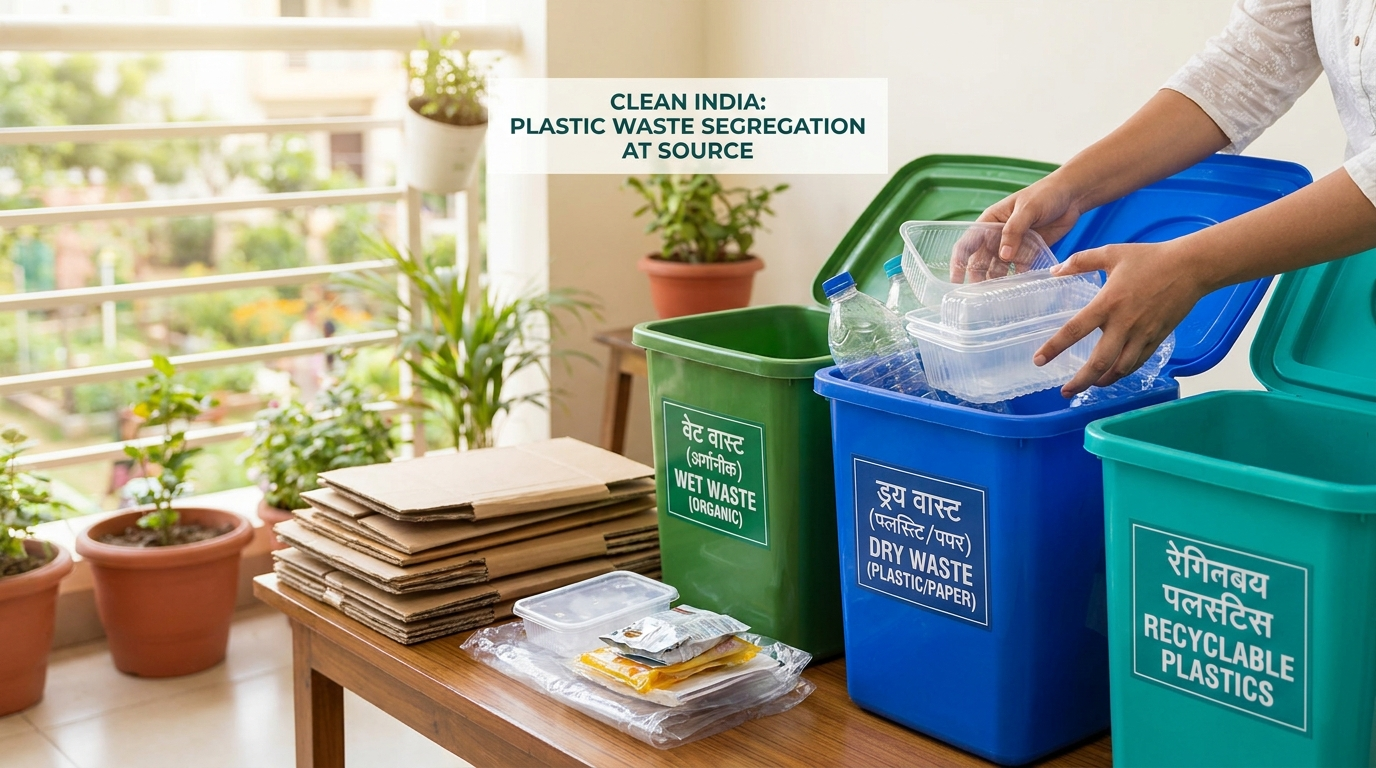
India recycles a far smaller share of its plastic than it could — and the single biggest reason isn’t a shortage of recyclers or technology. It’s that most plastic waste is never separated at the point where it’s generated. By the time mixed, food-contaminated waste reaches a sorting facility, much of its recyclable value is already lost. Plastic waste segregation at source is the unglamorous first step that quietly decides whether the entire circular economy works or fails.
For waste management companies, recyclers, manufacturers, RWAs, and sustainability professionals, segregation isn’t a civic nicety — it’s the economic foundation of plastic recovery. This guide explains why source segregation matters, how to do it correctly, and how it connects to India’s broader circular-economy mission.
Why Segregation at Source Decides Everything
A recycler’s output is only as good as the material that goes in. When dry plastic is mixed with wet kitchen waste, it becomes contaminated, smelly, and expensive to clean — and contaminated plastic fetches a fraction of the price of clean, sorted material. In many cases it can’t be recycled at all and ends up in a landfill or incinerator.
This is why source segregation — separating waste into categories at the household, office, or institution where it’s created — is the highest-leverage action in the whole chain. The numbers tell the story:
- Clean, segregated plastic can be recycled into higher-value products, while mixed waste is downcycled or discarded.
- Segregation at source dramatically reduces processing costs for recyclers, improving the economics of the entire system.
- It protects the health and dignity of waste workers, who otherwise sort hazardous, mixed waste by hand.
- It is legally mandated in India: the Solid Waste Management Rules, 2016 require waste generators to segregate waste into wet, dry, and hazardous streams at source.
In short, every downstream technology — mechanical recycling, chemical recycling, EPR compliance — performs better when fed clean, segregated input. Segregation is the multiplier that makes everything else worth doing.
The Categories That Matter
Effective segregation starts with understanding what goes where. At the most basic level, waste should be separated into three streams:
- Wet waste — kitchen scraps, food, garden waste (compostable)
- Dry waste — plastics, paper, metal, glass (recyclable)
- Hazardous/domestic — batteries, medical waste, e-waste (special handling)
Within the dry plastic stream, further sorting unlocks even more value. Recyclers pay the most for clean, single-polymer streams:
- PET — water and beverage bottles
- HDPE — milk jugs, shampoo and detergent containers
- LDPE/films — carry bags, packaging film, bubble wrap
- PP — food containers, bottle caps
- Multilayered packaging — chip packets, pouches (the hardest to recycle)
The closer a household or institution gets to handing over clean, type-separated plastic, the more of it actually re-enters the economy as a resource rather than as waste.
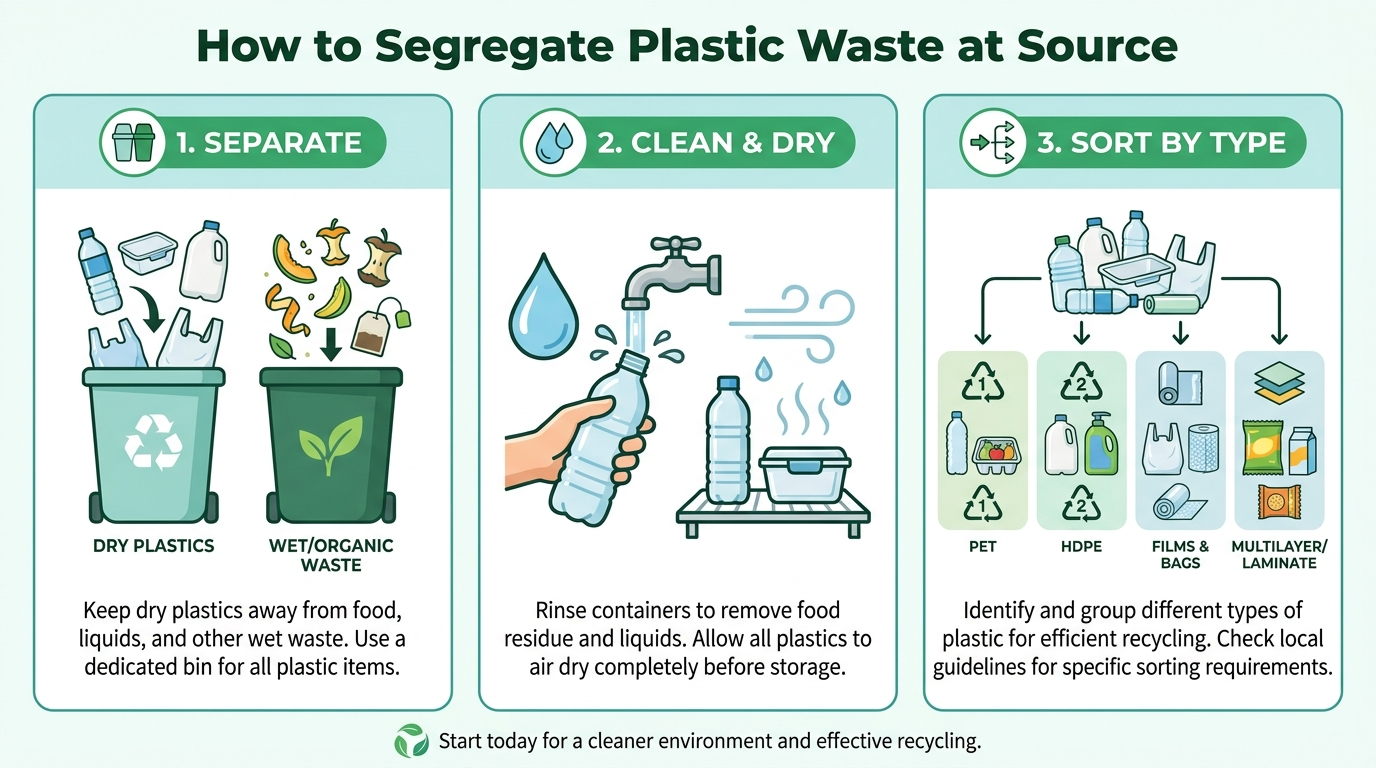
How to Segregate Plastic Correctly: A Practical Workflow
Good segregation is a habit, not a one-time effort. The workflow is simple enough for any home, school, or office to adopt:
Step 1 — Separate dry from wet, immediately
Keep two bins side by side: one for wet/organic waste, one for dry recyclables. The key is to separate at the moment of disposal — once dry plastic touches wet waste, it’s contaminated.
Step 2 — Clean and dry your plastics
Rinse out food and liquid residue from containers and let them dry. A clean PET bottle or food container is valuable; the same item coated in leftover food is not. This single step is what separates recyclable plastic from rejected plastic.
Step 3 — Sort by type where possible
If you can, group similar plastics together — bottles with bottles, films with films. Even rough sorting by type significantly raises the recovery value and speeds up downstream processing.
Step 4 — Hand over to an organized collection channel
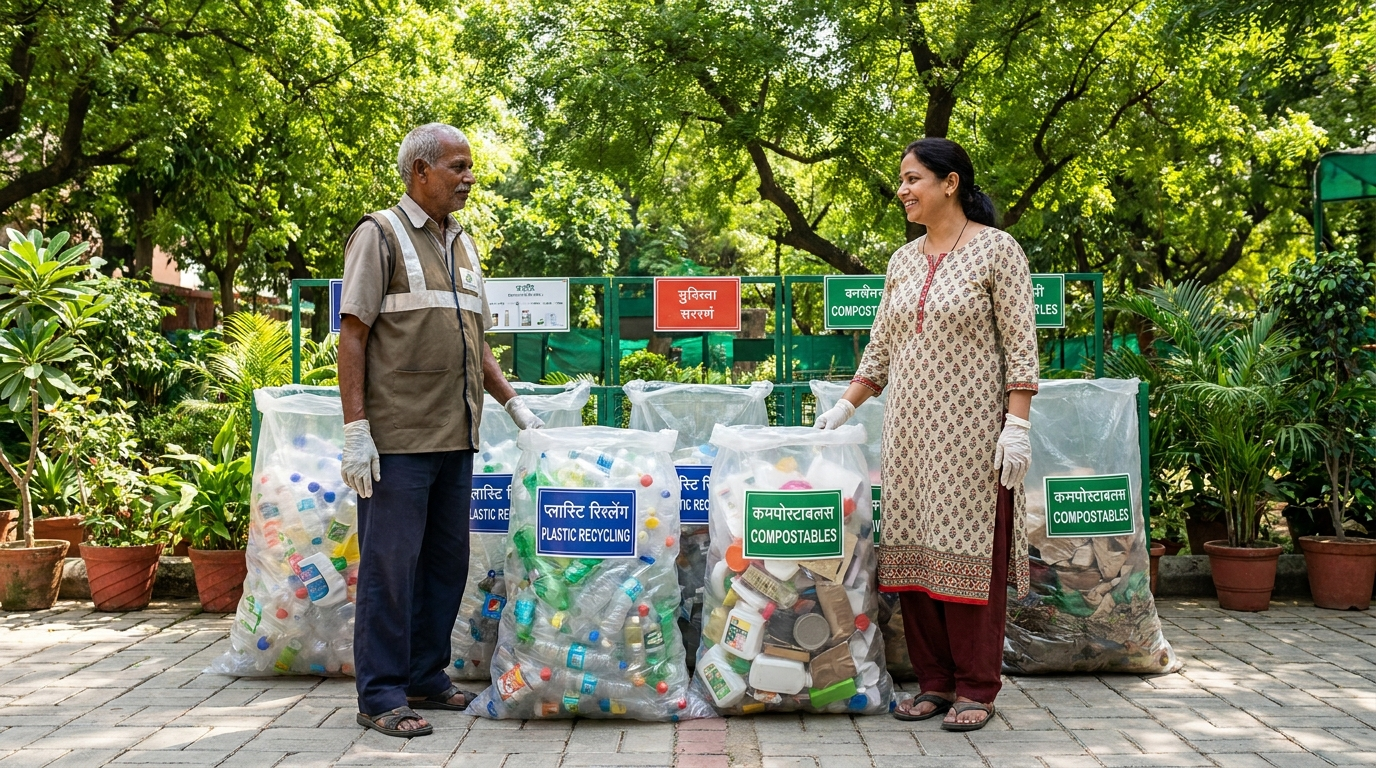
Segregation only pays off if the separated waste reaches a recycler through a traceable channel — not a mixed garbage truck that re-combines everything. This is the link where most well-intentioned segregation breaks down, and it’s exactly where an organized recovery network makes the difference.
Why Segregation Fails — and How to Fix It
If segregation is so valuable, why is it still India’s missing link? Three breakdowns recur:
1. Re-mixing during collection. Households segregate, but the collection vehicle dumps everything together. The fix is a collection system that keeps streams separate end to end. 2. No incentive or feedback loop. When people don’t see where their segregated waste goes, the habit fades. Transparent, traceable systems that show real impact sustain participation. 3. The informal sector is excluded. India’s waste pickers already recover enormous volumes of plastic, but informally and without support. Integrating them into organized, segregation-based systems improves both recovery rates and livelihoods.
Solving these isn’t about asking citizens to try harder — it’s about building the infrastructure that makes segregated waste flow cleanly from source to recycler. That is a systems problem, and it requires a systems-level solution.
Connecting Segregation to the Circular Economy: The Operation SHUDDHI Approach
This is precisely where Operation SHUDDHI® steps in. As India’s Plastic Waste Recovery and Circular Economy Mission, Operation SHUDDHI focuses on transforming plastic waste into wealth, livelihoods, and environmental value through collection, recycling, awareness, and circular-economy initiatives.
Segregation at source only creates value if the segregated material stays separated all the way to the recycler — and that is exactly what an organized network is built to guarantee. By establishing traceable collection centres, formalising and supporting waste workers, and running awareness programmes that build the segregation habit in homes, schools, and institutions, Operation SHUDDHI closes the gap between a well-sorted household bin and a high-value recycling line.
For businesses and institutions, partnering with such a network means their segregation efforts translate into measurable recovery, EPR compliance, and a credible sustainability story. For communities, it means cleaner surroundings and green livelihoods. For India, it means more plastic recovered as a resource and less buried as waste.
Frequently Asked Questions
1. What does segregation of waste at source mean? Segregation at source means separating waste into categories — typically wet, dry, and hazardous — at the point where it is generated, such as a home, office, or institution, rather than after it is collected and mixed. For plastics, it also means keeping dry recyclables clean and, ideally, sorted by type.
2. Why is plastic waste segregation important? Because clean, segregated plastic can be recycled into higher-value products, while mixed and contaminated plastic is usually downcycled or sent to landfill. Segregation lowers recycling costs, increases recovery rates, protects waste workers, and is legally required under India’s Solid Waste Management Rules, 2016.
3. How should households segregate plastic waste? Keep dry recyclables separate from wet waste, rinse and dry plastic containers to remove food residue, group similar plastics together where possible, and hand them to an organized collection channel that keeps the streams separate until they reach a recycler.
4. Which plastics are recyclable when segregated properly? Clean PET (bottles), HDPE (containers), LDPE/films, and PP (caps, tubs) are readily recyclable when segregated and cleaned. Multilayered packaging like chip packets and pouches is the hardest to recycle and needs specialised recovery pathways.
5. How does Operation SHUDDHI support waste segregation? Operation SHUDDHI builds traceable collection networks that keep segregated waste separated from source to recycler, runs awareness programmes that build the segregation habit, and integrates waste workers into organized systems — turning household segregation into measurable plastic recovery and green livelihoods.
Conclusion
Plastic waste segregation at source is the quiet decision point where India’s circular economy is either enabled or undermined. No recycling technology, EPR target, or sustainability pledge can overcome a stream of mixed, contaminated waste. Get segregation right, and clean material flows to recyclers, costs fall, recovery rates rise, and plastic finally becomes the resource it was always meant to be.
Operation SHUDDHI® exists to make that flow reliable — connecting segregated waste at the source to responsible recycling at scale, and turning a simple household habit into national impact. Clean it, sort it, and keep it moving in the right direction. From waste to wealth begins with a single, correctly sorted bin.
Partner with Operation SHUDDHI to build cleaner, traceable plastic recovery. Visit www.opshuddhi.org or write to team@opshuddhi.org.
Partner with Operation SHUDDHI®
Is your business generating plastic waste, or do you need quality recycled material? Let’s turn your plastic into value — and build India’s circular economy together.
♻️ Have plastic waste? Hand it over to us for responsible, traceable recycling — support your EPR compliance and turn waste into wealth.
🏭 Need recycled granules (rPET / PCR)? Source clean, traceable recycled material for your products — contact us for supply.
Join Operation Shuddhi →
Contact Us to Donate Plastic or Buy Granules