How to Get the Best Price for Plastic Scrap in India
Two people can sell the exact same sack of plastic and walk away with very different money. One gets ₹5 a kilo; the other gets ₹30. The difference is almost never luck — it is knowing what decides the price and who you sell to.
If you are a household, a housing society, a shop, a factory or a scrap collector in India, this guide breaks down exactly how plastic scrap is priced and the practical steps to earn the best price for your plastic scrap — the same principles Operation SHUDDHI® uses to pay sellers fairly as a direct recycler.
What decides your plastic scrap price?
Plastic scrap is not one product with one rate. The price per kg swings on five things: resin type, cleanliness, sorting, quantity, and how many middlemen sit between you and the recycler. Get these right and you move from the bottom of the market to the top.
1. Know your resin — it sets the ceiling
Every plastic item carries a recycling number (1–7). That number, more than anything, decides value.
- PET (#1) — water and cold-drink bottles. Consistently in demand for bottle-to-bottle and fibre recycling.
- HDPE (#2) — milk cans, shampoo bottles, rigid containers. One of the highest-value, most-recycled plastics.
- PP (#5) — crates, caps, woven bags, automobile parts. Strong, steady demand.
- LDPE / PP raffia (#4) — films, liners, woven sacks. Lower but real value when clean.
As a rule, rigid, single-resin plastics (PET, HDPE, PP) earn far more per kg than thin multilayer film or laminated pouches like chips packets. Nationally, mixed plastic scrap trades around ₹12–14/kg, while sorted single-grade material commands well above that.
2. Clean and dry beats contaminated
A wet, food-smeared, or dirt-filled load is discounted — the recycler has to wash and dry it. Clean, dry scrap free of contaminants routinely fetches 10–15% more than the same material dirty. A quick rinse and dry is one of the cheapest ways to raise your rate.
3. Sorted beats mixed — this is the big one
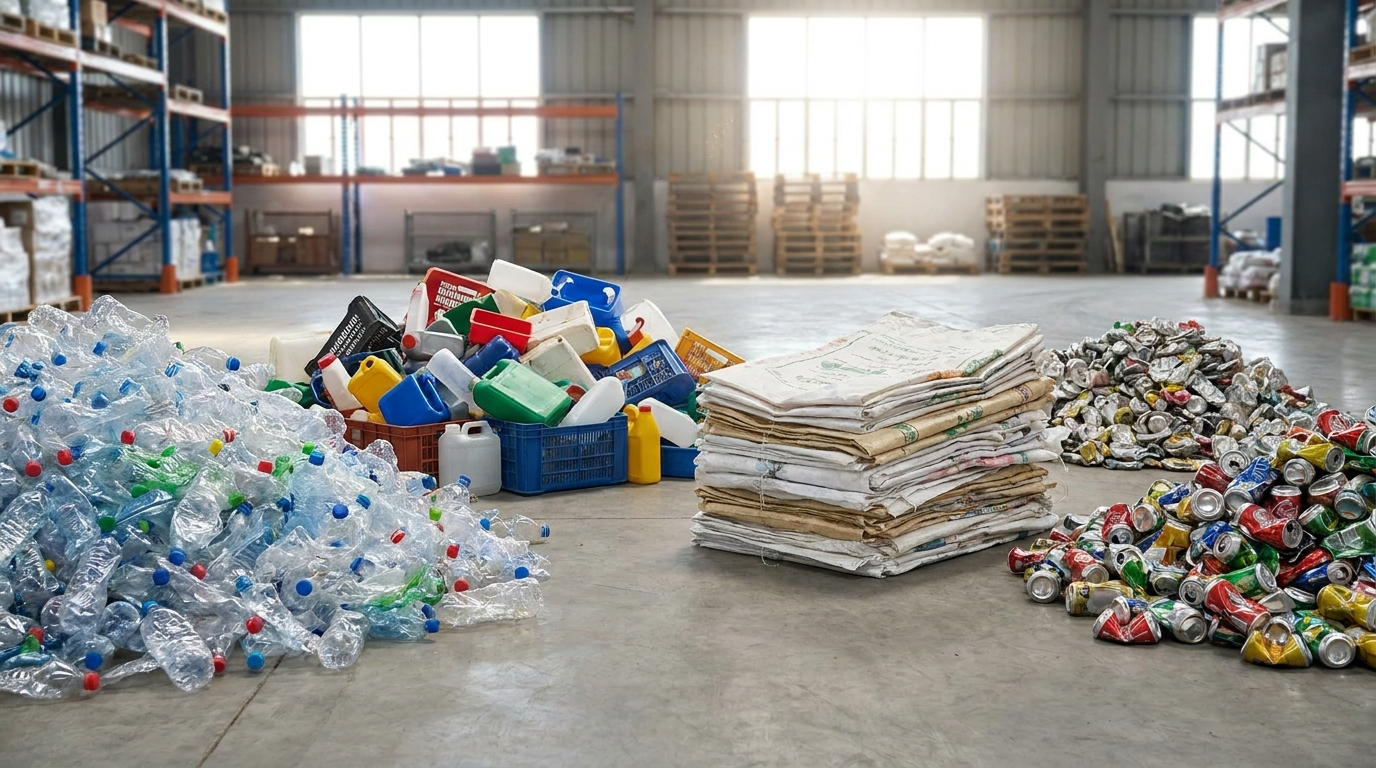
A mixed heap is priced at the lowest common rate. The moment you separate PET, HDPE, PP and film into their own bags, each pile earns its own — higher — rate. Clean, sorted single-grade plastic can fetch 50–100% more than mixed scrap. Sorting is the fastest raise you can give yourself, and it costs nothing but a little time.
The middleman problem: why selling direct to a recycler pays more
Here is what usually happens to a sack of scrap: it goes from you to the local kabadiwala, then to an area aggregator, then to a stockist, and only then to the actual recycler. Every hop takes a margin. By the time it reaches the processor, three or four people have already been paid — out of what could have been your money.
When you sell directly to a recycler, you skip those layers and capture close to the recycler-gate value. This is exactly why Operation SHUDDHI — which processes plastic itself — can pay sellers rates that a bottom-of-the-chain kabadiwala simply cannot match. Fewer hands, more money in yours.
7 practical ways to get the best price for your scrap
- Segregate by resin. PET, HDPE, PP and film in separate bags — the single biggest price lever.
- Keep it clean and dry. Empty, rinse and dry containers; avoid mixing in wet waste.
- Accumulate volume. Bulk and regular loads negotiate better rates than one-off small lots.
- Sell direct to a recycler, not through three middlemen.
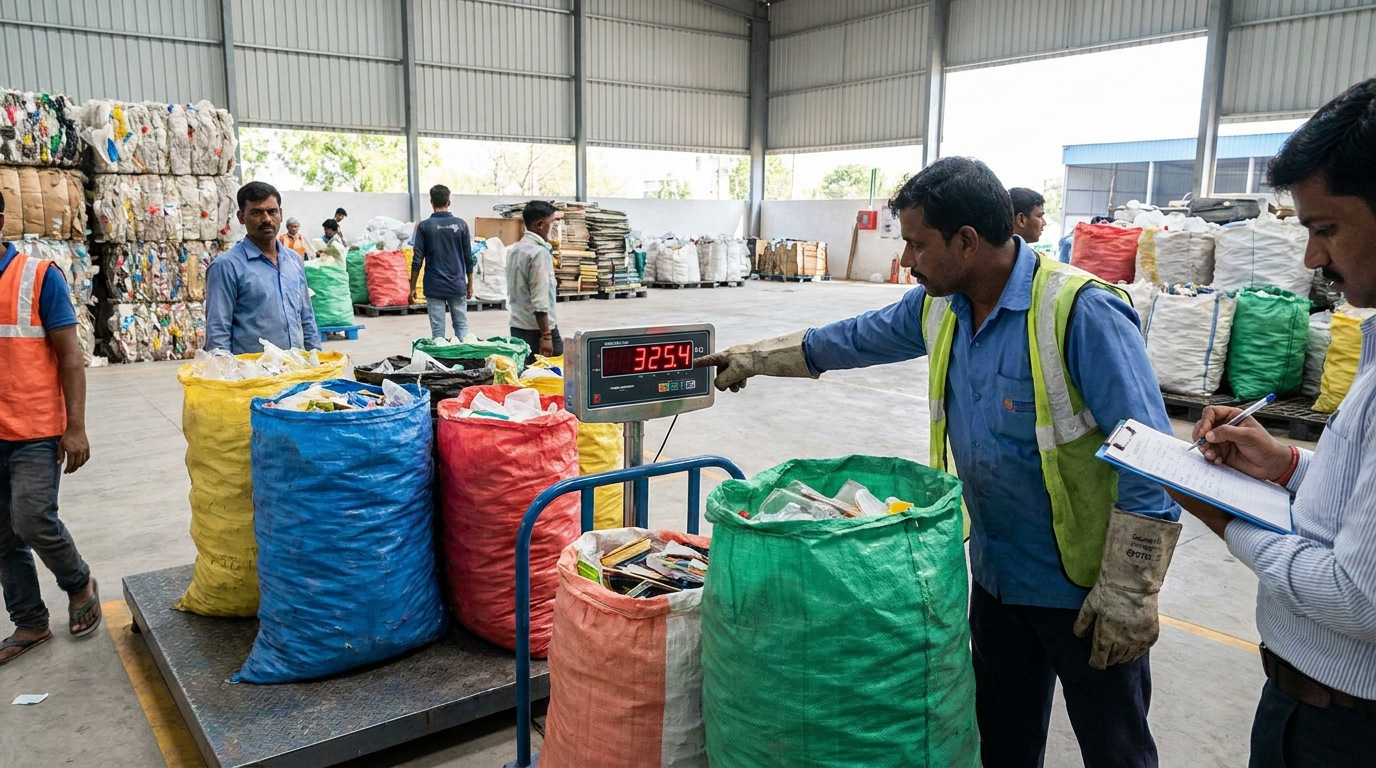
- Insist on transparent weighing. Watch the scale, confirm the reading, and question vague “contamination” deductions.
- Be a regular supplier. Consistent monthly volume earns better standing rates than occasional sales.
- Use free pickup where available, so transport cost does not eat into your rate.
For the exact per-kg rates Operation SHUDDHI pays across every material — rice bags, PET, HDPE, PP, aluminium and more — see our full best plastic scrap price list for India.
Free doorstep pickup across Delhi NCR
Transport cost quietly reduces your net rate — especially for bulky, low-density plastic. That is why Operation SHUDDHI offers free scrap pickup across Delhi NCR for businesses, societies and bulk generators. You do not pay to move the material; you simply hand over clean, sorted scrap and get paid at a transparent, direct-recycler rate.
If you are in the capital region, here is exactly how to sell plastic scrap in Delhi NCR with free doorstep pickup.
Outside Delhi NCR, you can plug into the same network and pricing by joining as a Collection Centre Partner — ideal for scrap dealers and entrepreneurs who want to build a profitable, purpose-driven scrap business.
Which plastic scrap gives the best price?
Quick answer for sellers who want the top of the market:
- Metals first: aluminium and aluminium cans are premium and infinitely recyclable.
- Rigid single-resin plastics next: clean HDPE, PET and PP containers.
- Clean woven bags and films: rice bags, PP films and jumbo (FIBC) bags.
- Lowest: multilayer laminated pouches — chips packets, cement and putty bags.
So if you want the best price, focus on collecting and cleanly sorting rigid, single-resin plastics and metals, and keep your multilayer waste separate rather than dumping it into the same heap.
Frequently Asked Questions
1. What is today’s plastic scrap rate per kg in India? Mixed plastic trades around ₹12–14/kg nationally, but sorted single-grade material earns much more. Rates change with market demand, quality and city, so for a confirmed quote on your exact material call Operation SHUDDHI on 9810039125 or see our published rate list.
2. Which plastic scrap has the highest price? Among common plastics, clean HDPE and PET rigid containers and sorted PP earn the most, while metals like aluminium are premium. Thin multilayer pouches (chips packets, cement bags) earn the least. Sorting by type is how you unlock the higher rates.
3. How do I sell plastic scrap directly to a recycler? Segregate and clean your material, estimate your quantity, and book a pickup with a direct recycler like Operation SHUDDHI instead of a local kabadiwala. Selling direct removes the middleman margins and gets you closer to the true recycler-gate price.
4. Do I get a better price for clean, sorted scrap? Yes — significantly. Clean, dry scrap earns roughly 10–15% more than dirty material, and sorted single-grade plastic can fetch 50–100% more than a mixed heap. A little sorting and rinsing pays for itself.
5. Is there a minimum quantity to sell, and is pickup really free? There is no rigid minimum, though regular and bulk loads get priority and the best rates. Pickup is free across Delhi NCR; outside NCR you can join as a Collection Centre Partner to access the same network.
Turn your scrap into its full value
Getting the best price for your plastic scrap comes down to a simple discipline: know your resin, keep it clean, sort it, and sell direct. Do that, and the same material that earns ₹5 a kilo as a mixed, dirty heap can earn several times more.
That is the philosophy behind Operation SHUDDHI® — plastic is not waste; plastic in the wrong place is waste. By selling to Operation SHUDDHI, you get a fair, transparent, direct-recycler price while turning waste into wealth, livelihoods and environmental value through a real circular economy.
📱 WhatsApp — +91 98990 86555
✉️ team@opshuddhi.org • 🌐 www.opshuddhi.org