Community Recycling Programs: How Your Neighbourhood Can Lead India’s Plastic Cleanup
India’s plastic problem can feel too big to solve. Millions of tonnes, an entire country, a crisis decades in the making. But the solution is surprisingly small and local. It doesn’t start in a ministry or a factory. It starts in your lane, your society gate, your school corridor — in community recycling programs run by ordinary people who decided their neighbourhood would do better.
Here’s why that local action matters so much, and how your community can lead.
The Problem Is National — But the Fix Is Local
A 2024 University of Leeds study in Nature found India to be the world’s largest plastic polluter, releasing about 9.3 million tonnes of plastic pollution a year (Down To Earth). India generates around 3.9 million tonnes of plastic waste a year — roughly 10,689 tonnes every day (CPCB, via PIB). And globally, only about 9% of plastic is actually recycled (OECD).
The single biggest reason? A collection gap. Plastic that is never collected can never be recycled — it ends up burned or dumped. And collection is, by its very nature, local. It happens (or fails to happen) at the level of homes, societies, schools, and streets.
That’s the opportunity: fix collection in enough communities, and you fix the national problem.
What a Community Recycling Program Actually Looks Like
You don’t need budgets or experts. A working neighbourhood program has just a few moving parts:
- A champion. One motivated person — an RWA member, a teacher, a shopkeeper — who owns the effort.
- Source segregation. Residents keep dry/recyclable plastic separate from wet waste (this is also the spirit of India’s Solid Waste Management Rules). Clean plastic is far more recyclable — start with our segregation guide.
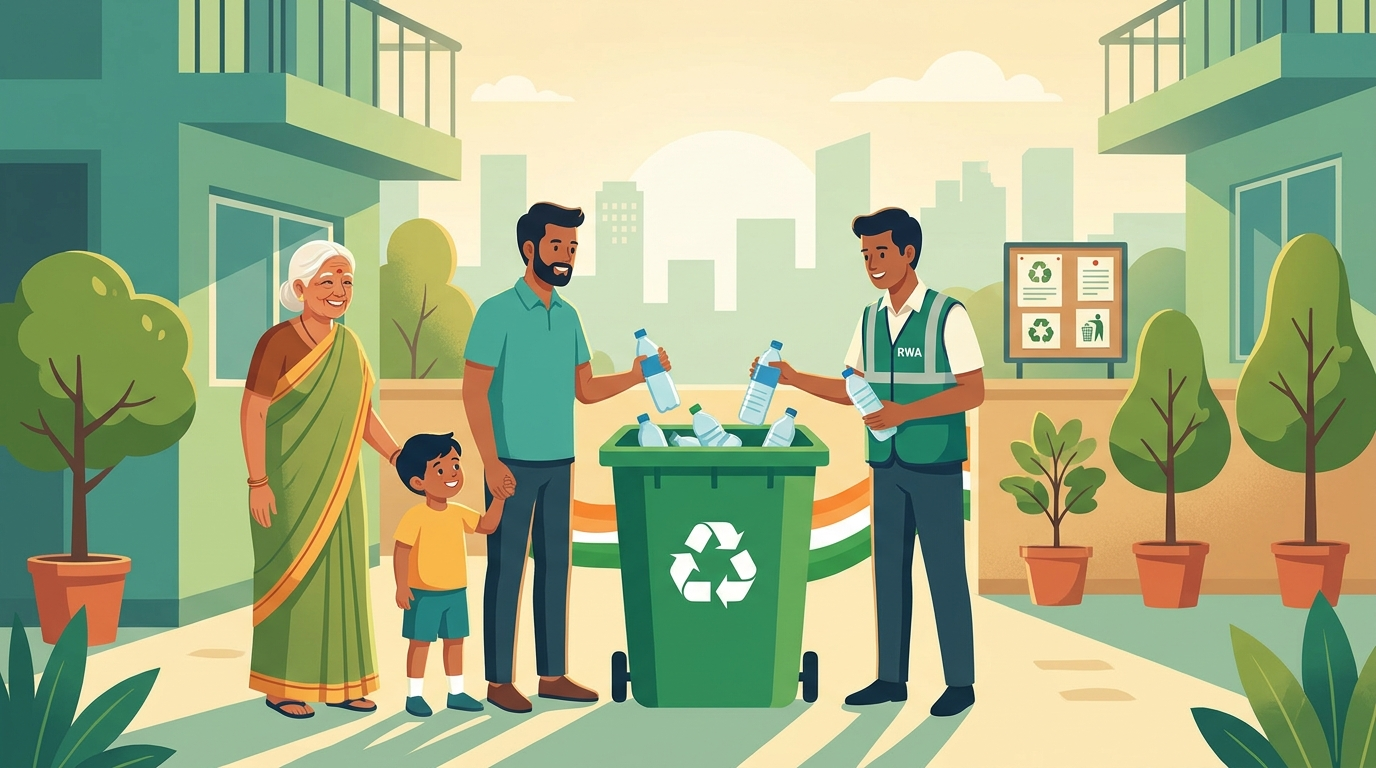
- A collection point. A clearly labelled plastic collection dustbin in a common area where everyone can drop clean plastic.
- A pickup partner. A tie-up with a collection-and-recycling network so the plastic actually reaches recyclers, not a landfill.
- Awareness. Simple, repeated reminders — a WhatsApp group, a notice board, a school assembly.
- Visible impact. Share how much plastic was diverted; people participate more when they can see results.
That’s it. Six simple parts, repeatable in any locality in India.
Who Can Run One — and Why You’d Want To
Community recycling programs thrive wherever people gather:
- RWAs & housing societies — high, steady volume of clean plastic.
- Schools & colleges — build lifelong habits and hands-on learning.
- Offices & commercial establishments — strengthen sustainability and ESG performance.
- Markets, temples, hospitals — capture large amounts of plastic at the source.
The benefits go beyond a cleaner street. A good program creates dignified work for waste collectors, keeps drains from clogging, reduces open burning (and the toxic air it creates), and gives a community real pride. From waste to wealth — right where you live.
How Operation Shuddhi Helps Your Community Start
Operation SHUDDHI® exists to make community-level action easy. We provide the missing pieces so your neighbourhood doesn’t have to build everything alone:
- Free plastic collection for residents and organisations in Delhi NCR.
- Plastic collection dustbins for societies, schools, offices, and markets — turning your space into a permanent recovery point. Every active point appears on our live dustbin locator.
- Collection Centre Partnerships for those who want to build local infrastructure across India.
- Volunteers who help run drives and awareness campaigns.
In a single day, our team installed 126 plastic collection bins across Delhi NCR — 126 communities given a head start, all at once.
Frequently Asked Questions
1. What is a community recycling program? It’s a local, organised effort — usually run by an RWA, society, school, or group of residents — to segregate, collect, and route plastic (and other recyclables) to responsible recyclers instead of letting it become litter or landfill.
2. How do we start one in our society or school? Appoint a champion, set up source segregation, place a labelled plastic collection bin, tie up with a collection-and-recycling partner, run simple awareness, and track your impact. Operation Shuddhi can provide the bin and collection support.
3. Does our community need money or special equipment? No. The essentials are segregation, a collection point, and a reliable pickup partner. The biggest ingredient is participation, not budget.
4. What kind of plastic should we collect? Keep it clean and dry — bottles, containers, packaging. A quick rinse dramatically increases recycling value. Avoid mixing plastic with wet/food waste.
5. How does this help beyond our neighbourhood? Local collection closes India’s biggest gap. Multiply working community programs across thousands of localities, and you address the national plastic crisis — one neighbourhood at a time.
Your Neighbourhood Can Lead
The cleanest, most powerful change in India won’t be announced from a stage. It will happen quietly — a bin at a society gate, a segregation habit in a school, a champion who refused to look away. Communities don’t just participate in the solution; they are the solution.
Lead yours. Request a plastic dustbin for your area, join as a volunteer, become a Collection Centre Partner, or join the Operation SHUDDHI mission. Together, neighbourhood by neighbourhood — from waste to wealth, for a cleaner, circular India.